

Major Technical Changes Between Old and New Versions of "Knitted Down Garments" Standard
Major Technical Changes Between Old and New Versions of FZ/T 73053-2025 "Knitted Down Garments"
The industry standard FZ/T 73053-2025 "Knitted Down Garments," under the jurisdiction of the Subcommittee on Knitwear of the National Technical Committee on Textiles Standardization (SAC/TC209/SC6), was released on April 10, 2025, and will come into effect on May 1, 2027. Compared with the old standard, the main technical changes are as follows:
01 Scope of Application
The scope has been expanded to include: "Other fibers may be used as filling for accessories such as hoods, collars, plackets, and flap pockets." Additionally, the statement "Not applicable to garments filled with a mixture of down and other fibers, or garments using other fibers as filling in separate layers" has been added. Corresponding clauses regarding raw materials have been removed, making the scope of the standard more precise.
02 Terms and Definitions
The term for fluorescent color has been revised to: Color presented when certain substances absorb incident light of a specific wavelength and are excited to emit visible light. (Note: Colors that show fluorescence under UV lamp irradiation.)
03 Product Sizing
The revised standard clearly specifies the marking method for sizes outside the scope of GB/T 6411 or GB/T 1335 (all parts), i.e., "sizes outside the range shall be incremented or decremented according to the grading values and principles stipulated in the above standards."
04 Alkylphenol and Alkylphenol Ethoxylates
Assessment of alkylphenol (AP) and alkylphenol ethoxylates (APnEO) has been added. This item only assesses the down filling. Existing test methods have been refined to enhance the standard's operability.
05 Colorfastness
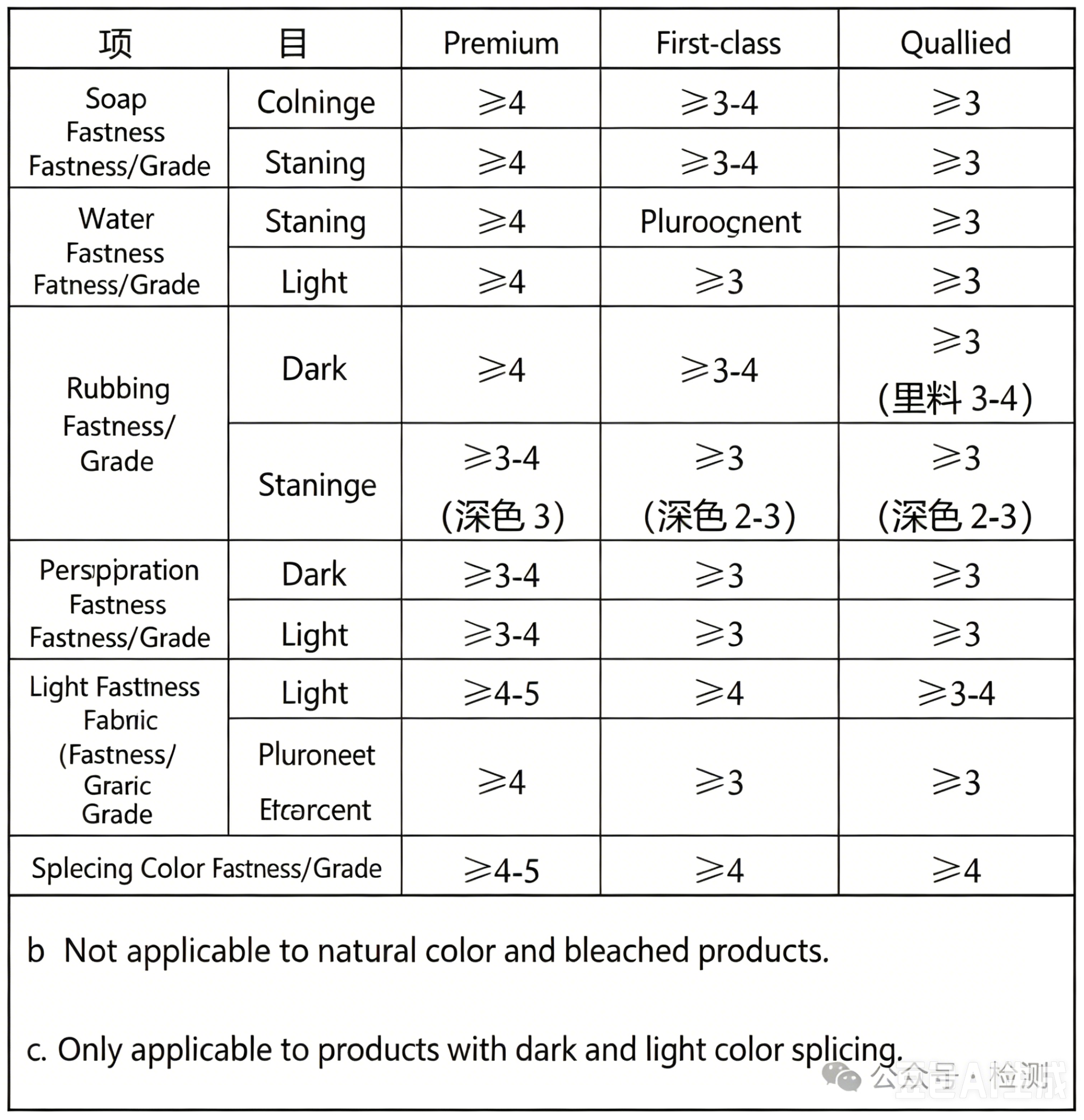
Colorfastness to perspiration, previously specified according to GB 18401, is now listed separately with specific index requirements. The requirements for premium grade products have been appropriately raised to improve their quality. Notes have been added that colorfastness to perspiration, colorfastness to soaping, colorfastness to water, and colorfastness to rubbing do not apply to natural white and bleached products.
The test method for colorfastness to light has been changed from GB/T 8427–2008 to GB/T 8427–2019, specifying that general conditions are used for exposure.
Knitted down garments often feature contrasting color splicing designs, which can easily lead to color transfer during laundering, severely affecting the product's appearance. Therefore, this standard has also established corresponding requirements for color transfer between spliced sections.
06 Down Leakage Value
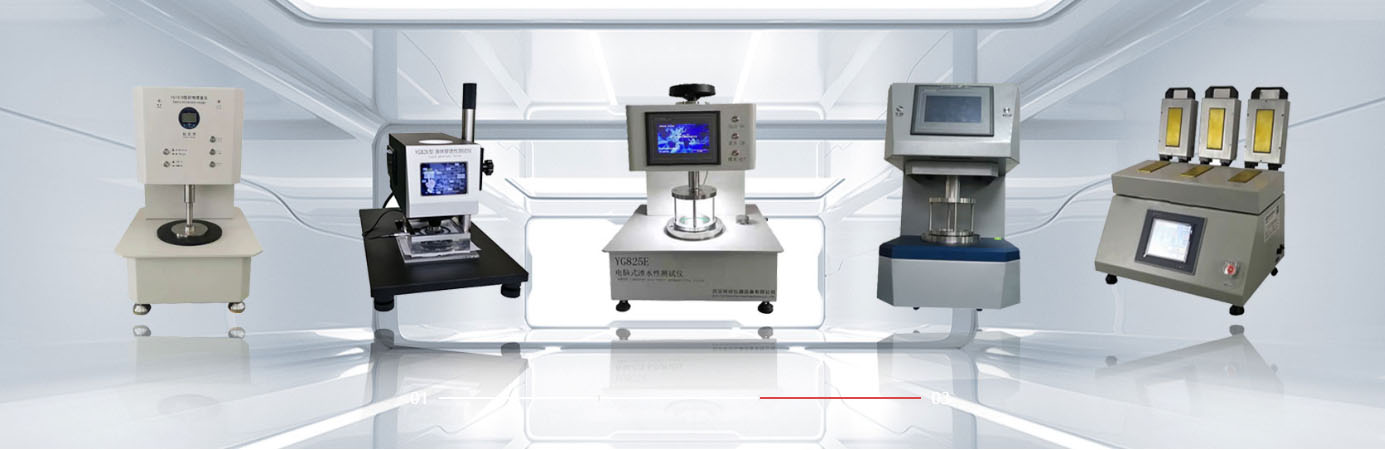
This standard adopts the whole-garment down leakage test method from GB/T 14272–2021 to assess the overall down leakage resistance of down garments, unifying the assessment indices and test methods for down leakage resistance of down garments.
07 Pilling Resistance
The test method for pilling resistance has been revised as follows:
For wool knitted fabrics: Test according to GB/T 4802.3. For worsted products, tumble for 14,400 revolutions; rating according to GSB 16-2923 Standard Photos for Pilling of Worsted Wool Knitwear. For woolen and semi-worsted products, tumble for 7,200 revolutions; rating according to GSB 16-2922 Standard Photos for Pilling of Woolen Knitwear.
For other fabrics: Test according to Method E in GB/T 4802.1–2008; rating according to GSB 16-1523 Standard Photos for Pilling of Knitted Fabrics.
08 Seam Strength
Separate assessment values have been set for shell fabric and lining fabric. The test method has been updated, specifying that if the shell fabric and lining are sewn together, a combined specimen shall be tested.
09 Accessories
Regarding raw materials in appearance quality, the standard already specifies that the appearance and function of accessories such as buttons and zippers should be intact. To avoid repetition, the requirement regarding "no defects" for buttons, ornaments, zippers, etc., in Table 1 of the old standard has been removed. The item has been revised to require that there be no accessible sharp edges or points. Corresponding test methods have been added.
10 Appearance Quality After Laundering
For products marked as "do not tumble dry" or "do not machine dry," testing shall be carried out according to the line dry method specified in GB/T 8629–2017.
An additional note specifies that assessment only applies to products marked as washable in the care instructions.
Additional assessment indices for the appearance quality of down garments after laundering, reflecting their specific characteristics, have been added.
11 Provisions for Children's Products
GB 31701, as a mandatory standard, already specifies requirements for items such as drawstrings. To avoid duplication, related assessment items for children's products have been removed during the revision process. The requirement has been revised to: Knitted down garments for children shall also comply with the provisions of GB 31701.
12 Declared Down Content Value
The requirement for raw materials has been expanded to include that the declared down content value shall not be less than 50%.
13 Surface Defects, Dimensional Differences in Symmetrical Parts
The regulation on surface defects has been revised to assess color difference between the same type of fabric.
For pattern matching and alignment, detailed descriptions of assessed parts have been removed, and an exception for special designs has been added.
The grading for dimensional differences in symmetrical parts has been adjusted, with stricter requirements for smaller dimensions. The adjusted indices are shown in the table below.
14 Product Care Instructions
The care instructions section has been updated to specify that the grading for down content declarations shall comply with GB/T 14272.