029-89301886
Testing Classroom | Interpretation of Fabric Snagging Test Methods
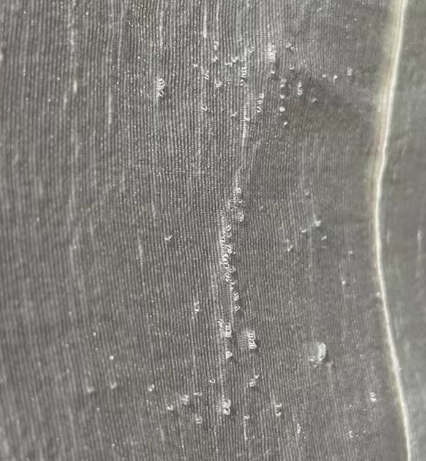
Fabric Snagging refers to surface defects in textiles caused by yarns or fibers being caught by sharp objects. It typically includes protrusions formed by fibers or yarns being pulled out of the fabric surface, such as loops, fiber loops, fiber bundles, or fuzz; as well as tightened yarn segments (tight streaks) caused by local yarns or fibers being pulled taut. Snagging usually manifests as one or a combination of these phenomena.
Currently, there are three national standard test methods for evaluating snagging performance:
Textiles—Evaluation of Fabric Snagging—Mace Method (GB/T 11047—2008) (referred to as the Mace Method),
Textiles—Testing and Evaluation of Fabric Snagging—Part 2: Random Tumble Method (GB/T 11047.2—2022) (referred to as the Random Tumble Method),
Textiles—Testing and Evaluation of Fabric Snagging—Part 3: Card Roller Method (GB/T 11047.3—2024) (referred to as the Card Roller Method).
International test methods for snagging performance mainly include: ASTM D3939/D3939M-13(2017) (Mace Method), JIS L 1058:2021 7.1 (Mace Method), JIS L 1058:2021 7.2 (Card Roller Method), and BS 8479:2008 (Random Tumble Method).
The product applicability scope of all three national standard test methods is knitted and woven fabrics. Among them, the Mace Method is particularly suitable for man-made filament yarns and textured filament yarn fabrics. None of the three methods apply to mesh-structured fabrics or nonwovens. The Mace Method is not suitable for napped fabrics, while the Random Tumble Method and Card Roller Method are only not suitable for tufted fabrics.
YG518 Fabric Snagging Tester
[Image]
[Image]
Comparison of Test Principles of the Three National Standard Test Methods
| Test Method | Test Principle |
|---|---|
| Mace Method | A tubular specimen is placed over a rotating cylinder covered with felt. A mace equipped with tungsten needle pins is placed on the specimen surface via a chain. As the cylinder rotates at a constant speed, the mace randomly flips and jumps over the specimen surface, snagging the specimen and causing fabric snagging. |
| Random Tumble Method | A tubular specimen is mounted on a polyurethane tube covered with felt using locking rings, then placed inside a regular octagonal snagging box containing four rows of snagging pins. The box rotates at a constant speed, causing the specimens to tumble and roll randomly inside the box, snagging on the pins and producing fabric snagging. |
| Card Roller Method | A specimen with an internal spacer is sewn, fixed at one end to a rotating drum, with the other end free. As the drum rotates at a constant speed, the specimen periodically contacts snagging needles and drives a card roller with rotational resistance, creating snagging on the specimen surface. |
Comparison of Equipment/Materials of the Three National Standard Test Methods
| Test Method | Equipment | Main Materials |
|---|---|---|
| Mace Method | Mace Snagging Tester | Chain, mace (32 mm diameter ball, 11 tungsten carbide needle pins), cylinder covered with 3 mm rubber, felt (3–3.2 mm thick, 165 mm wide). |
| Random Tumble Method | Random Tumble Snagging Tester | Pin plates (20 metal snagging pins per row), polyurethane sample mounting tubes, felt (70±0.5 mm × 110±0.5 mm), polyurethane adhesive, locking rings. |
| Card Roller Method | Card Roller Snagging Tester | Snagging needles (material: Mn60 A as specified in Quality Carbon Structural Steels GB/T 699—2015), silicone spacers (length 120±1 mm, width 90±1 mm, thickness 1.1±0.2 mm). |
Comparison of Test Procedures/Parameters of the Three National Standard Test Methods
| Test Method | Test Procedure | Test Parameters |
|---|---|---|
| Mace Method | Smoothly mount the specimen over the instrument cylinder, with warp and weft directions randomly placed on different cylinders. Secure both ends with rubber rings. Place the mace on the specimen surface via the guide rod. Start the instrument, allowing the mace to randomly flip and jump over the specimen surface. After testing, remove the mace and take off the specimen. | Cylinder rotations: 600 r (other rotations may be selected for special specimens) |
| Random Tumble Method | Clean the test chamber interior of excess fibers and debris using a vacuum cleaner. Place four loaded specimen mounting tubes into each test chamber. Close the chamber, start the instrument to rotate at a constant speed. After testing, remove the tubes, take out the locking rings, and remove specimens from the tubes. | Chamber rotation speed: 60±2 r/min; Chamber rotations: 2000 r (other rotations may be selected for special specimens) |
| Card Roller Method | Apply a load to the card roller to adjust rotational resistance. Clamp the specimen onto the rotating drum with the free end extended. Start the instrument so the specimen periodically contacts the snagging needles. Stop after the specified number of drum rotations, remove the specimen for evaluation. Test the other side similarly. After both sides are tested, remove the specimen and remove sewing threads. | Card roller load: 150 g; Rotating drum speed: 45±1 r/min; Rotating drum rotations: 5 r (other loads or rotations may be selected for special specimens) |
Comparison of Result Grading of the Three National Standard Test Methods
| Test Method | Snagging Performance Evaluation |
|---|---|
| Mace Method | ≥ Grade 4: Good snag resistance; ≥ Grade 3-4: Snag resistant; ≤ Grade 3: Poor snag resistance |
| Random Tumble Method | ≥ Grade 4: Good snag resistance; ≥ Grade 3: Snag resistant; ≤ Grade 2-3: Poor snag resistance |
| Card Roller Method | ≥ Grade 4: Good snag resistance; ≥ Grade 3: Snag resistant; ≤ Grade 2-3: Poor snag resistance |
Snagging Performance Evaluation: For grades >4, all three methods describe the performance as having good snag resistance; for grades <4, the Random Tumble Method and Card Roller Method share the same snagging performance evaluation, which differs from the Mace Method.
National Standard GB/T 21295-2024 Technical Requirements for Physical and Chemical Properties of Garments stipulates that finished products with snag resistance requirements must achieve ≥ Grade 3-4. Textile Industry Standard FZ/T 70018-2023 Requirements for Physical and Chemical Properties of Knitted Garments stipulates that snagging performance must reach ≥ Grade 3.
Daily fabric snagging is generally irreversible, so contact with sharp objects should be avoided. Care instructions may include reminders for fabrics prone to snagging, advising consumers to avoid sharp objects during daily wear and washing maintenance, thereby reducing the risk of snagging.